52
52
Clinical Insight
P R O B E
• V o l . L I I I • N o . 3 • A p r – J u n 2 0 1 4
Drug Info
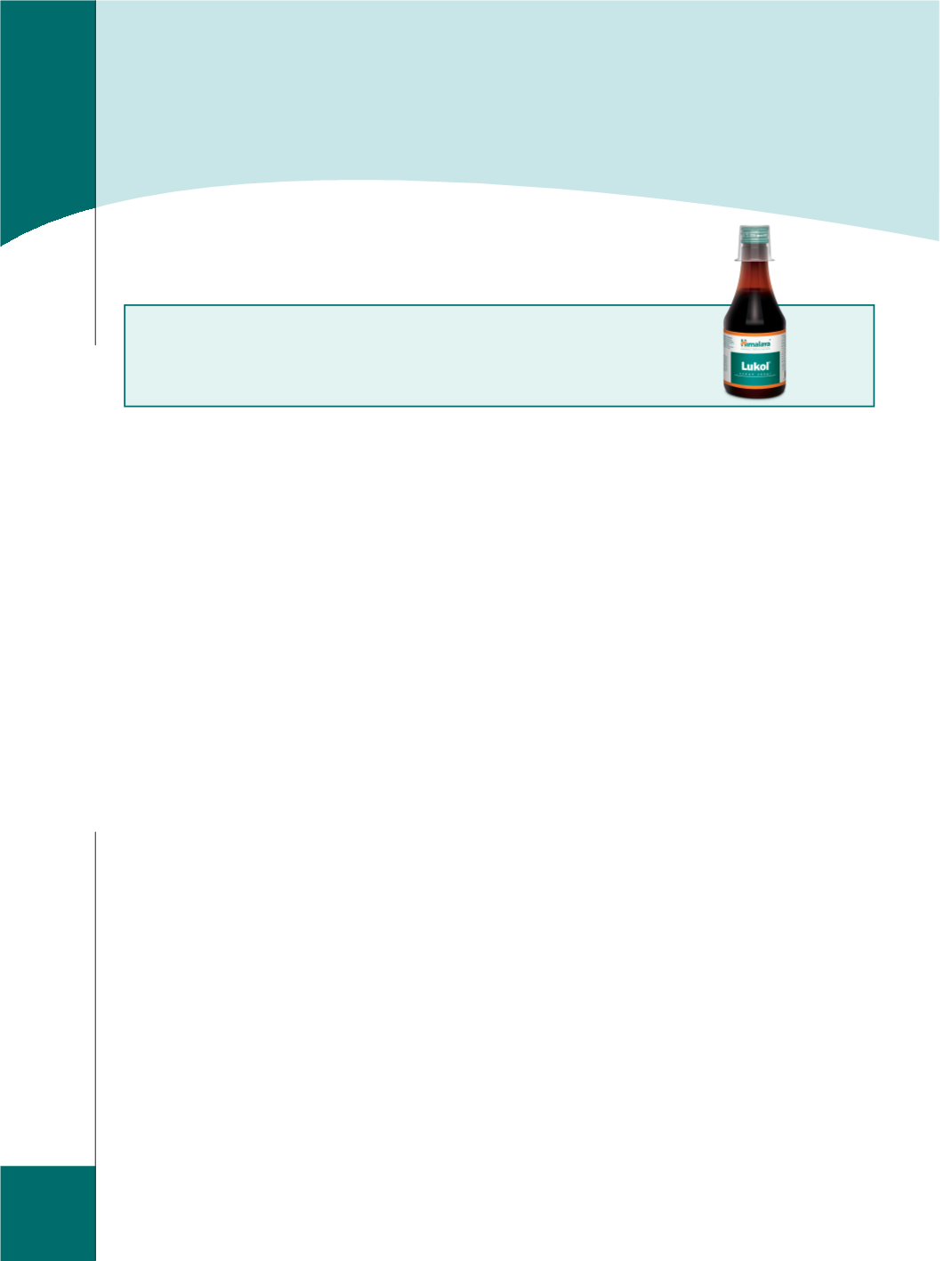
Lukol
®
(SYRUP)
Instills confidence in her
Introduction
Leukorrhea is a universal problem of
all women. It is defined as excessive
non purulent, non offensive and
non irritant vaginal discharge. The
discharge may range from excess
of normal to one which is a part
of wide spectrum of ailments. The
vaginal discharge with foul smell
makes it embarrassing to get into
social gatherings and even engage in
personal affairs. Further, the condition
may give rise to several other
complications hence it deserves careful
treatment.
Composition
Each 5 ml Lukol syrup contains:
Exts.
Dhataki
(
Woodfordia fruticosa
)
43 mg
Lodhra (
Symplocos racemosa
) 42 mg
Shatavari (
Asparagus racemosus
) 42 mg
Punarnava (
Boerhaavia diffusa
) 22 mg
Vasaka (
Adhatoda vasica
)
22 mg
Jambu (
Syzygium cuminii
)
21 mg
Ushira (
Vetiveria zizanioides
) 11 mg
Jeeraka (
Cuminum cyminum
) 10 mg
Bilva (
Aegle marmelos
)
5 mg
Sunthi (
Zingiber officinale
)
3 mg
Triphala
13 mg
Maricha (
Piper nigrum
)
3 mg
Kharjura (
Phoenix dactylifera
) 11 mg
Palasha (
Butea frondosa
)
2 mg
Clinical Pharmacology
Lukol has antibacterial, antifungal,
antispasmodic, astringent,
antioxidant, adaptogenic, anti-
inflammatory and analgesic actions.
The antimicrobial, antifungal,
and astringent actions of Lukol on
mucous membrane of the genital
system are responsible for controlling
leukorrhea. The anti-inflammatory,
analgesic and antispasmodic actions
of Lukol provide relief from associated
symptoms of leukorrhea and pelvic
inflammation. Lukol also improves
general health and relieves malaise and
low backache.
Indications
• Nonspecific leukorrhea
• Leukorrhea associated with
–
–
PID (Pelvic Inflammatory
Diseases)
–
–
Candida vulvovaginitis
–
–
Bacterial vaginosis
–
–
Atrophic vaginitis
–
–
Chronic cervicitis
Dosage
10 ml twice daily
Pharmacological
Actions of Principal
Ingredients
1. Antibacterial activity
S racemosa
,
W fruticosa
,
A racemosus
,
B
frondosa
, and
C cyminum
have potent
antimicrobial action against bacteria
responsible for leukorrhea associated
with bacterial vaginosis and PID.
2. Antifungal activity
S cumuni
,
V zizanioides
, and
Z officinale
have potent antifungal
action against commonly involved
fungi in leukorrhea associated with
Candida
vulvovaginitis.
3. Anti-spasmodic activity
Z officinale
and
P nigrum
possess
antispasmodic property which is
helpful in relieving spasms and cramps
in leukorrhea associated with chronic
cervicitis and PID.
4. Antioxidant activity
W fruticosa
,
A racemosus
,
B diffusa
,
C cyminum
,
A marmelos
, Triphala, and
P dactylifera
are potent antioxidants,
which synergistically contribute to
the anti-inflammatory and wound
healing activities in cases of leukorrhea
associated with chronic cervicitis,
atrophic vaginitis and PID.


