23
Clinical insight
P R O B E
• V o l . L I I I • N o . 3 • A p r – J u n 2 0 1 4
Abdel-Hafeez, et al.
Breast-feeding Protects Against Infantile Diarrhea
Results
Parasite detection and
infection intensity among
infants with persistent
diarrhea
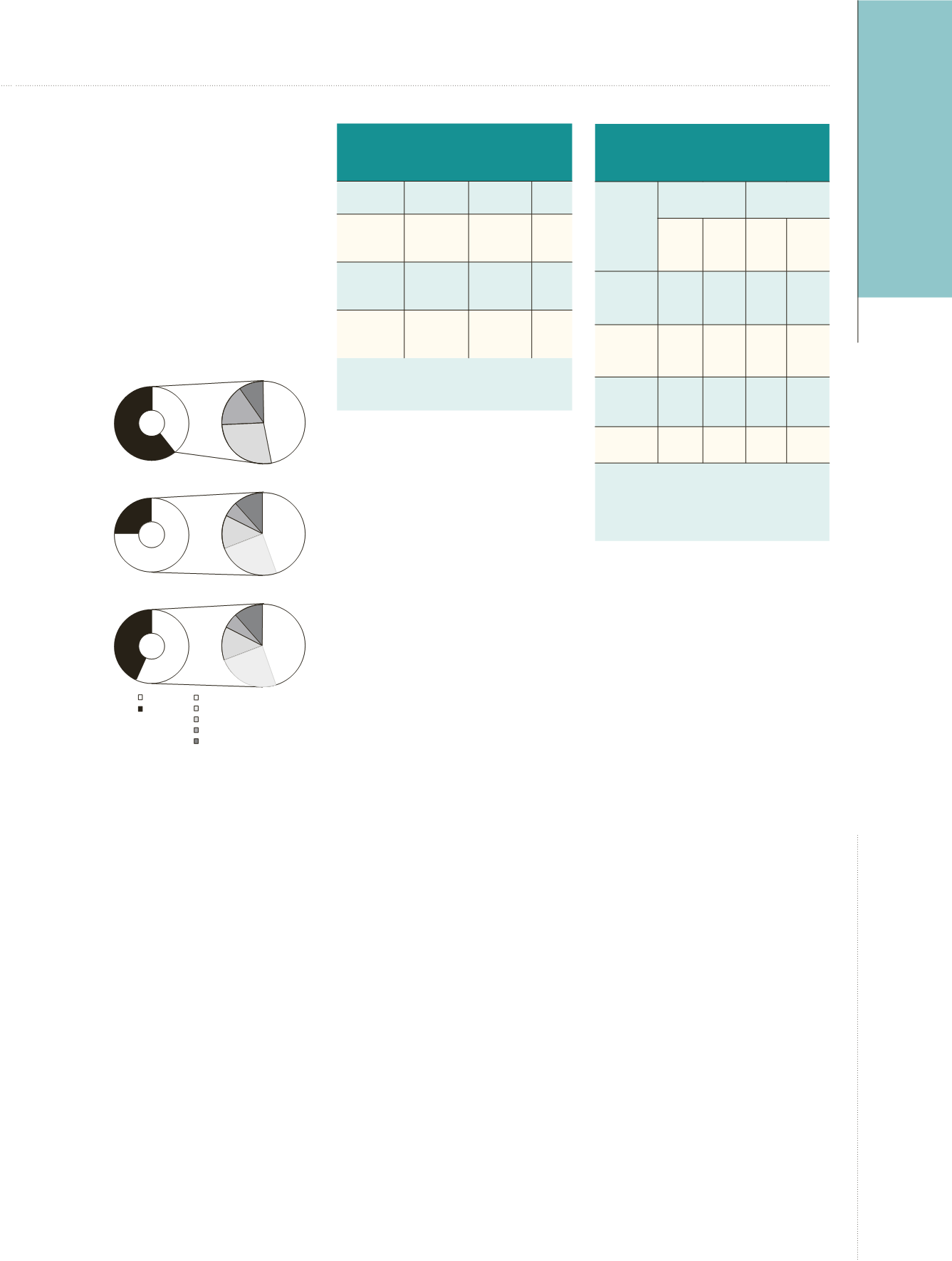
Protozoa were detected in 62 breastfed
infants (38.5%), a significantly lower
incidence than that in non-breastfed
infants, among which 121 (75.2%)
were infected (Figure 1).
Table 1. Parasite Intensity of
Infected Infants With Persistent
Diarrhea According to Feeding State
Parasite
Intensity Breastfed
Non-
breastfed Total
Single
Parasite
Infection
2.9 ±
0.9
a
3.3 ±
0.9
3.1
±
1.0
Mixed
Parasite
Infections
NA
2.7 ±
1.0
2.7
±
1.0
Total
2.9 ± 0.9
3.2 ±
0.9
3.1
±
1.0
NA, not applicable.
a
P
< .05 between breastfed versus
non-breastfed groups.
Serum levels of IgE and
TNF-α in infants with
persistent diarrhea
Serum levels of IgE and TNF-
α
are summarized in Table 2. In the
breastfed group, the serum levels of
IgE and TNF-
α
of parasite-positive
infants were significantly elevated
(514.8 ± 95.2 IU/mL and 6.2 ± 0.7
pg/mL, respectively) compared with
the levels in parasite-negative infants
(118.1 ± 15.9 IU/mL and 3.5 ± 0.5,
respectively) (
P
< .01). In the non-
breastfed group, the serum levels of
IgE and TNF-
α
of parasite-positive
infants were also significantly elevated
(645.9 ± 67.8 IU/mL and 7.7 ± 1.2
pg/mL, respectively) than those of
parasite-negative infants (121.1 ±
9.6 IU/mL and 3.7 ± 0.3 pg/mL,
respectively) (
P
< .01). In addition,
the serum levels of IgE and TNF-
α
of parasite-infected infants were
significantly lower in the breastfed
group (514.8 ± 95.2 IU/mL and 6.2 ±
0.7 pg/mL, respectively) than those
in the non-breastfed group (645.9 ±
67.8 IU/mL and 7.7 ± 1.2 pg/mL,
respectively) (
P
< .01). The serum
levels of IgE and TNF-
α
of infants
infected with each parasite were sig
nificantly lower in the breastfed group
than in the non-breastfed group (
P
<
.01) (data not shown). There were no
Table 2. Levels of Serum IgE and
TNF-
α
in Infants With Persistent
Diarrhea
Protozoa
Breastfed (n =
161)
Non-breastfed
(n = 161)
IgE
(IU/
mL)
TNF-
α
(pg/
mL)
IgE
(IU/
mL)
TNF-
α
(pg/
mL)
Positive
(n =
183)
514.8
±
95.2
a,b
6.2 ±
0.7
a,b
645.9
±
67.8
b
7.7 ±
1.2
b
Males
(n = 72)
487.8
± 97.2
5.8 ±
0.8
c
653.1
±
67.3
7.7 ±
1.1
Females
(n = 111)
534.3
± 90.0
6.5 ±
0.6
641.7
±
68.2
7.7 ±
1.2
Negative
(n = 139)
118.1
± 15.9
3.5 ±
0.5
121.1
± 9.6
3.7 ±
0.3
a
P
< .01 between breastfed and non-
breastfed group.
b
P
< .01 between positive and negative
group.
c
P
< .05 between boys and girls.
significant differences in the serum
levels of IgE and TNF-
α
of the
parasite-non-infected infants between
the breastfed and non-breastfed
groups.
There were no significant differences
in the serum levels of IgE between
parasite-infected males (487.8 ± 97.2
IU/mL and 653.1 ± 67.3 IU/mL,
respectively) and females (534.3 ±
90.0 IU/mL and 641.7 ± 68.2 IU/
mL) of the parasite infected breastfed
and non-breastfed groups. However,
the serum levels of TNF-
α
in the
breastfed group were significantly
lower in parasite-infected males (5.8 ±
0.8 pg/mL) than in parasite-infected
females (6.5 ± 0.6 pg/mL) (
P
< .05).
Relation between serum
levels of IgE and TNF-α and
parasite infection intensity
There was a significant positive
correlation between the infection
intensity and the serum levels of IgE
(Figure 2A) and TNF-
α
(Figure
2B) in the breastfed group. On the
Blastocystis
spp
Mixed parasite infection
Breastfed
Non-breastfed
Total
62
(38.5%)
a
n=161
99
(61.5%)
6
(9.7%)
10
(16.1%)
17
(27.4%)
29
(46.8%)
121
(75.2%)
n=161
40
(24.8%)
7(5.8%)
54
(44.6%)
14
(11.6%)
16
(13.2%)
30
(24.8%)
183
(56.8%)
139
(43.2%)
13(7.1%)
83
(45.4%)
14
(7.7%)
26
(14.2%)
47
(25.7%)
n=322
Cryptosporidium
spp.
E histolytica/dispair
G lamblia
Positive
Negative
Figure 1.
Intestinal Protozoa Isolated From
Feces of 322 Infants With Persistent Diarrhea
According to Feeding State
The details of the mixed parasite
infection from non-breastfed group were
Cryptosporidium
spp and
E histolytica
/
E
dispar
; 4 (3.3%),
Cryptosporidium
spp and
G
lamblia
; 4 (3.3%),
Cryptosporidium
spp and
Blastocystis spp; 6 (5.0%).
a
P
< .05 between breastfed versus non-
breastfed.
Cryptosporidium
spp was the most
common protozoan detected in both
groups, followed by
E histolytica
/
E dispar
,
G lamblia
, and
Blastocystis
spp. Mixed parasitic infections were
observed only in the non-breastfed
group. The intensity of single parasitic
infection of the breastfed group was
significantly less than that of the non-
breastfed group (Table 1).


