Apr–Jun 2014 • Vol LIII • No 4
7
Health News
Screening
Colonoscopies
Unnecessary After
the Age of 75
Older people should stop
having unnecessary screening
colonoscopies. Current
guidelines say that most people
aged 76 to 85 can stop being
screened for colorectal cancer,
and that those over 85 should
stop. Regardless of age, people
who have always had normal
results and have no symptoms
can wait 10 years between
screening colonoscopies.
Yet a recent study of Medicare
patients in Texas, published
in
JAMA Internal Medicine
,
found that 23% of people
over 70 years had potentially
inappropriate colonoscopies,
based on their age or screening
history. The rate rose to 39%
in those aged 76 to 85.
With increasing age, the
benefits of screening decline,
while the risks from the
procedure increase.
1
Smoking
Immediately Upon
Waking Increases
Lung Cancer Risk
Smokers who light up soon
after waking may be at
especially high risk for lung
cancer.
According to a new study
published in
Cancer
Epidemiology
,
Biomarkers &
Prevention
, people who smoked
within 5 minutes of waking
had much higher urine levels
of 4-(methylnitrosamino)-
1-(3-pyridyl)-1-butanol
(NNAL), a byproduct
of the carcinogen
4-(methylnitrosamino)-
1-(3-pyridyl)-1-butanone
(NNK), which is found only
in tobacco, than smokers who
waited. This held true even
when they smoked the same
number of cigarettes per day.
Even relatively small increases
in NNAL levels are associated
with increased risk of lung
cancer.
1
Best Vegetables in
Terms of Value and
Nutrition
To get more nutritional bang
for your buck, buy beans,
potatoes, peas, and corn.
A recent study from the
University of Washington,
which appeared in the online
journal
PLoS One
, compared
98 vegetables in terms of value
and nutrition.
While dark green vegetables,
such as broccoli, scored
guidance to learn these
exercises, which involve
tightening and releasing the
muscles.
3
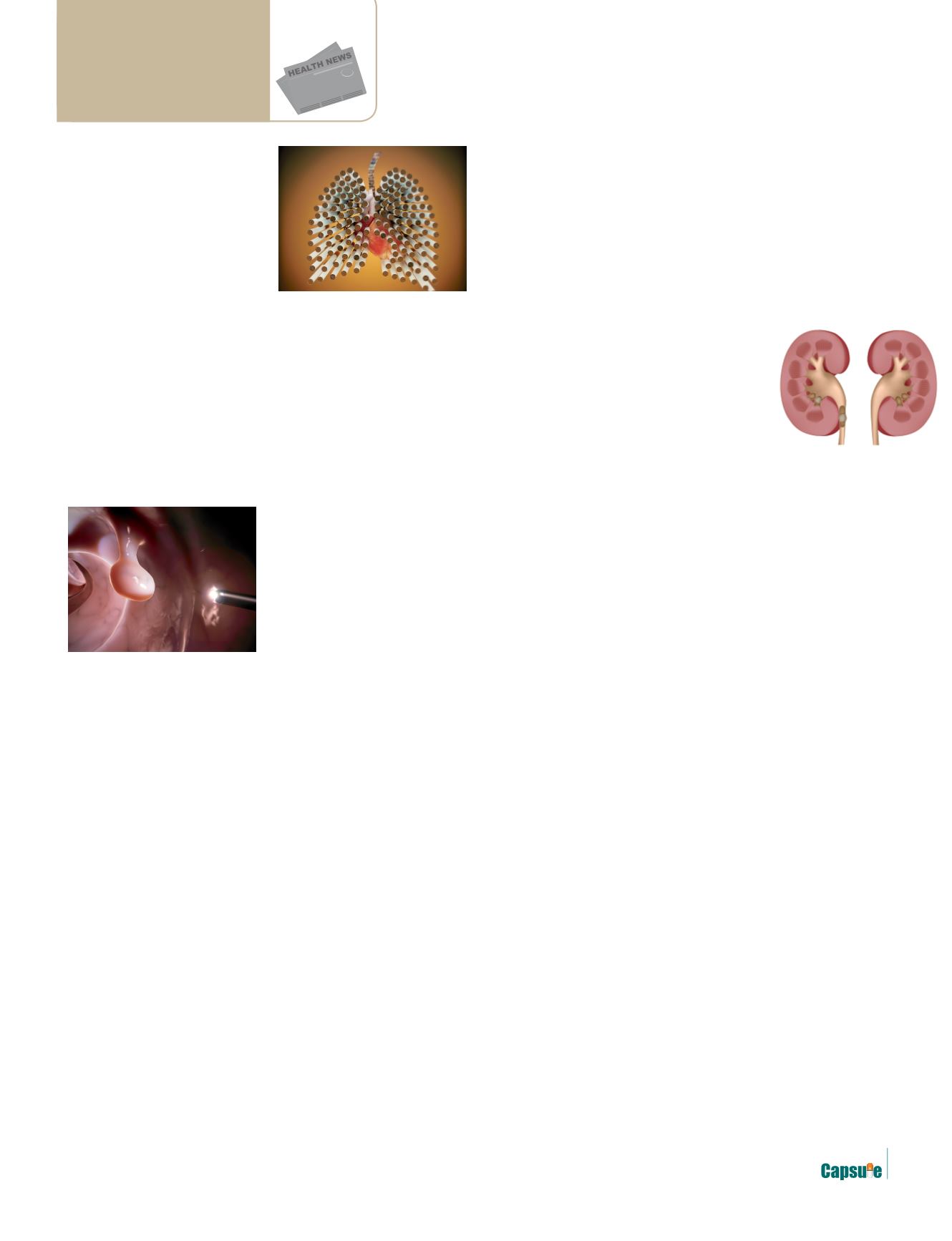
High Doses of
Vitamin C Supple-
ments—A Risk
Factor for
Kidney
Stones
Think twice
about taking
high doses of vitamin C
supplements—they increase
the risk of kidney stones.
This was confirmed by a
recent study in
JAMA Internal
Medicine
, which found that
among 49,000 Swedish men,
those who took vitamin C
(typically 1000 mg/day) were
twice as likely to develop
kidney stones as those who did
not take the supplement.
In any case, there is no
convincing evidence that
vitamin C supplements are of
any benefit.
However, multivitamins,
which typically contain about
60 mg of vitamin C, were not
associated with increased risk
of kidney stones. Foods and
beverages containing vitamin
C have never been linked to
stones. In fact, lemon juice
and orange juice may help
prevent them.
3
References
1.
UC Berkeley Wellness Letter.
2013;29(11):8.
2.
UC Berkeley Wellness Letter.
2013;29(14):8.
3.
UC Berkeley Wellness Letter.
2013;29(9):8.
highest in nutrient density,
the study found that beans
and starchy vegetables offer
the best nutritional value for
the comparatively less money
spent. Nutrient density was
based on the levels of fiber,
potassium, magnesium, and
vitamins A, C, and K. Fresh,
frozen, and canned vegetables
were found to provide
comparable nutritional value.
2
Pelvic Floor
Training Helpful
During Urinary
Incontinence
Pelvic floor training, such
as Kegel exercises, can help
a woman with urinary
incontinence, according to a
2009 review by the Cochrane
Collaboration. A Norwegian
review of several studies,
published in the
World Journal
of Urology
in 2012, found
convincing evidence that
pelvic floor exercises can help
with both stress incontinence
and pelvic organ prolapse,
which can lead to urinary
incontinence. Specifically,
such exercises are good for
stress incontinence or urge
incontinence. Pelvic floor
muscles support the bladder
and help to urinate. They
weaken with age, obesity, and
after childbirth, and this can
lead to incontinence.
Research has also shown
that pelvic floor exercises
can be valuable for
preventing pregnancy-related
incontinence. Seek expert


