Editor in chief: Dr Pralhad S Patki•Managing Editor: Dr Jayashree B Keshav•Editorial Team: Shruthi VB, Shruthi VK, Janaki RG, Anil S, Sushma M, Dhriti A•Layout Artists: Dayananda Rao S, Santosh G
Edited and published by Dr PS Patki, MD. Printed at M/s Sri Sudhindra Offset Process, #97, DT Street, 8th Cross, Malleshwaram, Bangalore 560003
10
• Apr–Jun 2014 • Vol LIII • No 4
Fact File
Diarrhea
• Globally, there are nearly 1.7 billion cases of diarrheal disease
every year.
1
• Each year, diarrhea kills around 760,000 children under 5
years.
1
• Diarrhea is a leading cause of malnutrition in children under 5
years.
1
• Rotavirus is the principal source of severe diarrhea in infants
and young children, worldwide.
2
• Improved water sources can reduce diarrhea morbidity by
21%; improved sanitation by 37.5%; and the simple act of
washing hands at critical times (before cooking and eating and
after defecating) can reduce the number of diarrhea cases by as
much as 35%.
3
References
1. WHO.
. Accessed
January 16, 2014.
2. CDC.
Accessed January 16,
2014.
3. CDC.
. Accessed
January 16, 2014.
Health Tips
Event Calendar
9th International Respiratory Syncytial Virus
Symposium
Date:
November 9 to 13, 2014
Venue:
Stellenbosch, South Africa
For more details, visit:
/
International Society of University Colon and
Rectal Surgeons – 26th Biennial Conference
2014
Date:
September 4 to 7, 2014
Venue:
Cape Town, South Africa
For more details, visit:
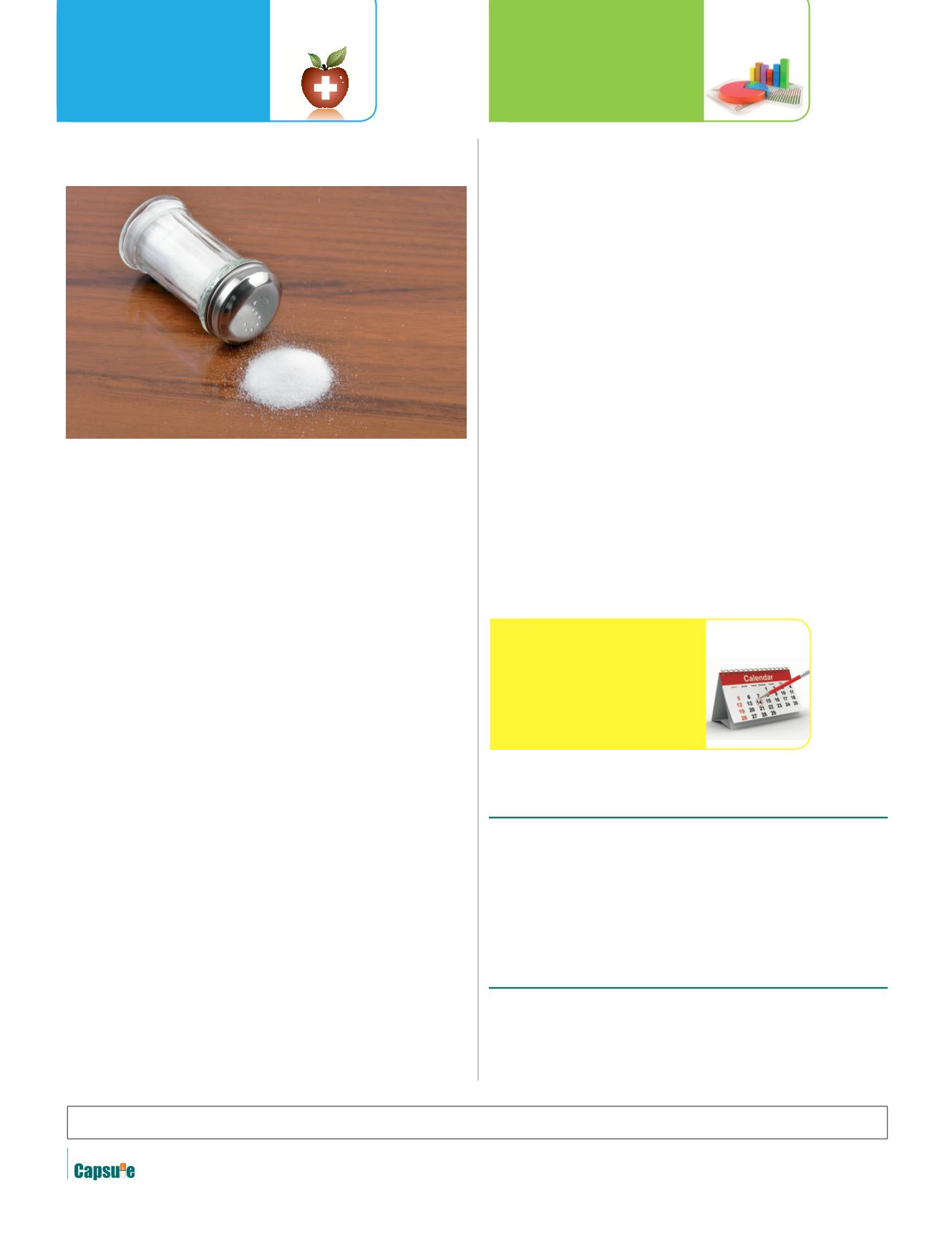
Low Salt Diet
A key to healthy eating is choosing foods lower in salt.
Most people consume more salt than required. The current
recommendation is to consume less than 2.3 g of salt a day. For
someone with high blood pressure, the doctor may advise eating
less salt, as recent research has shown that people consuming
low-levels of salt in their diet had even better blood pressure
lowering benefits.
Tips for Reducing Salt in Diet
• Buy fresh, plain frozen, or canned vegetables, poultry, fish, and
lean meat with no salt added.
• Use herbs, spices, and salt-free seasoning blends in cooking and
at the table.
• Prepare rice, pasta, and hot cereals without salt. Cut back on
instant or flavored rice, pasta, and cereal mixes, which usually
have added salt.
• Choose ready-to-eat foods that are low in salt; avoid frozen
meal, pizza, packaged mixes, canned soups or broths, which
often have a lot of salt.
• When available, buy low or no-salt-added versions of foods.
1
High salt intake can have effects beyond increased blood pressure,
and can be fatal.
• It can cause atherosclerosis or even trigger heart failure.
• It contributes to bone loss and increased risk of fractures over
time.
• It increases the risk of kidney stones and gastric cancer.
2
References
1. National Heart, Lung, and Blood Institute.
Accessed February
19, 2014.
2.
UC Berkeley Wellness Letter.
2013;29(14):2.


