6
• Apr–Jun 2014 • Vol LIII • No 4
I
am prescribing Lukol from the past 9 to 10 years and found it
to be very effective in nonspecific leukorrhea, leukorrhea post
IUCD and tubectomy, and leukorrhea associated with pelvic
inflammatory disease. Lukol shows maximum benefits after 3
months of treatment.
— Dr Usha Sharma
Obstetric and Gynecology Surgical Clinic
Patna, Bihar
M
y experience of treating patients with Liv.52 range is
excellent. It is the only drug with 0% side effects.
I have successfully treated a challenging case of hepatocellular
failure due to ethanol abuse. The patient recovered completely
with Liv.52 DS. My overall experience with The Himalaya Drug
Company is very good. They have a very good rapport with
doctors.
— Dr B Ramana Rao
No. 94/H, 9th cross, RMV Extension,
Bangalore 560080, Karnataka
I
have used Septilin in patients with chronic ear, nose, and throat
(ENT) disorders and found good results. I would recommend
Septilin tablets in chronic ENT conditions to prevent recurrence.
— Dr Rupa S Thakur
Trimurti Arcade, Near Sarvodaya Hospital
LBS Marg, Ghatkopar
Mumbai, Maharashtra
I
have been prescribing Pilex tablets and ointment for the last 20
years. I found the drug very useful in my clinical experience.
— Dr SS Raman
Nirmala Hospital
Eravipuram,
Kollam 691011, Kerala
Product Feedback
Fitness
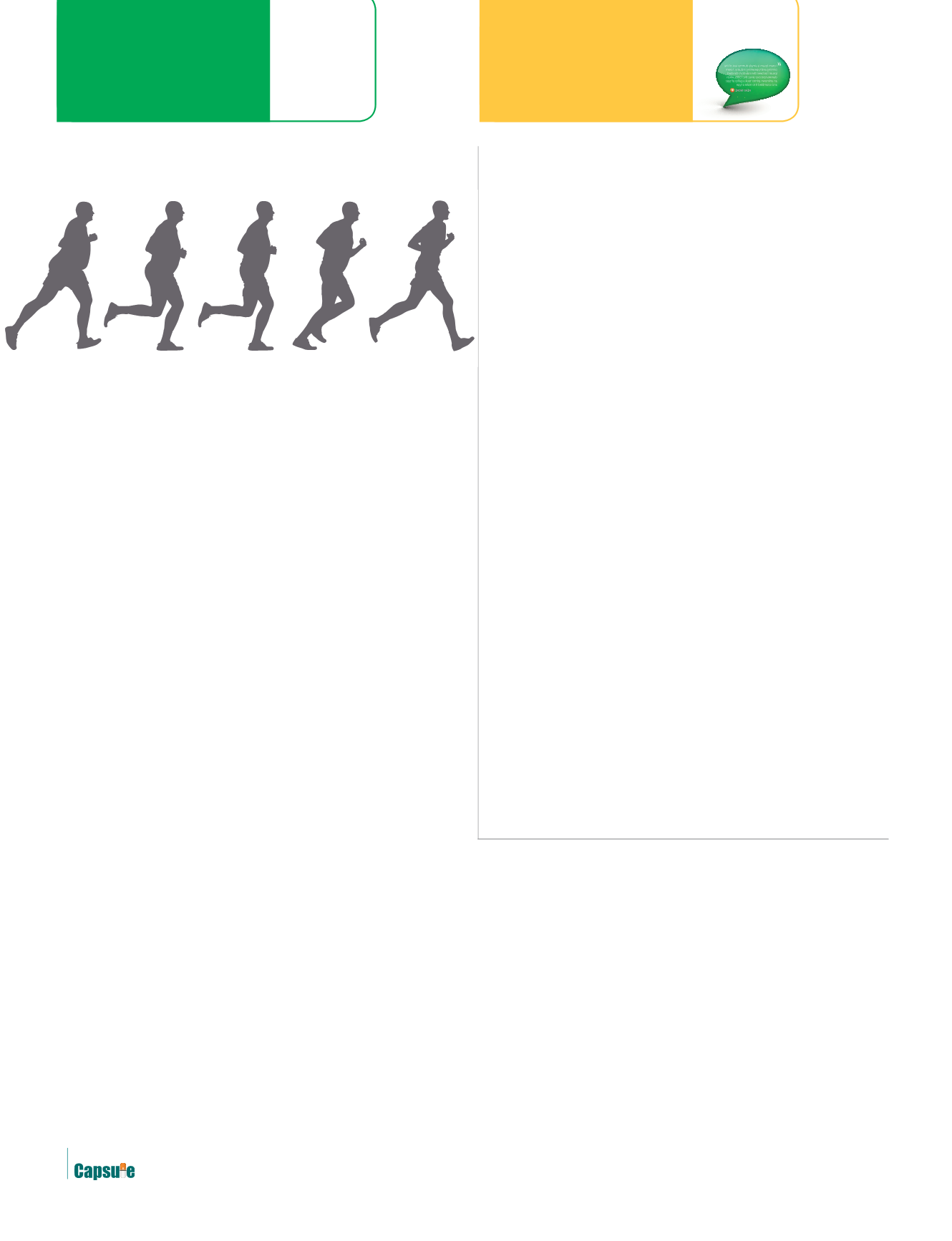
Moderate Midlife Exercise
Moderate midlife exercise,
defined by 30 minutes of
physical activity every day,
can help decrease the risk of
many diseases. It strengthens
the muscles and bones and
improves overall sense of well-
being.
1
Numerous studies have
shown that at any age, people
who are physically fit have an
improved quality of life and
a reduced risk of most of the
chronic diseases. A growing
research suggests that being
fit in middle age can have a
big payoff even 2 or 3 decades
later.
2
Following are the
recommendations from the
Centers for Disease Control
and Prevention for physical
activity:
• Brisk walking at about 3 to
4 miles per hour is highly
beneficial.
• Every adult should
participate in 30 minutes or
more of moderate intensity
activity on most, and
preferably all, days of the
week.
• Moderate activities may
include wide variety of
occupational or recreational
activities including yard
work, household tasks,
cycling, and swimming.
3
If one chooses to start a
walking program, here are a
few tips to keep in mind.
• Start slowly: Each time,
warm up for 5 minutes by
walking slowly and then
pick up speed until the
heart and lungs work faster
and deeper. Finally, cool
down by walking slowly for
another 5 minutes.
• Calculate the pace: Divide
the distance walked (miles)
by the time spent in
walking (hours). Increase
the pace gradually for
higher cardiovascular
benefits, which in turn has
greater impact on one’s
longevity.
• Keep it safe: Bring a friend
along or walk with a group.
Wear a reflective vest or
bright colors when walking
at dusk, dawn, or night.
According to 2 recent studies
from the Cooper Institute in
Dallas, physical fitness has a
positive impact on one’s health
and longevity. Another clinical
study determined that people
who were fittest in midlives
were found to be one-third less
likely to develop dementia in
their 70s and 80s than those
who were initially the least fit.
Physical activity and fitness
also have direct effects on the
brain that lower dementia risk
by reducing brain shrinkage.
Get Into the Habit
A benefit of exercising in
middle age is that it increases
the likelihood that one will
continue to exercise in later
life. It tends to go along
with other good habits like
eating healthy foods and not
smoking.
4
References
1. Health for Women.
grhealth.org. Accessed February 20,
2014.
2. UC Berkeley Wellness Letter
.
2013;29(11):6.
3. Myers J.
Circulation.
2003;107:e2–e5.
4. eHealth Connection.
.
cooperhealth.org. Accessed February
26, 2014.


